
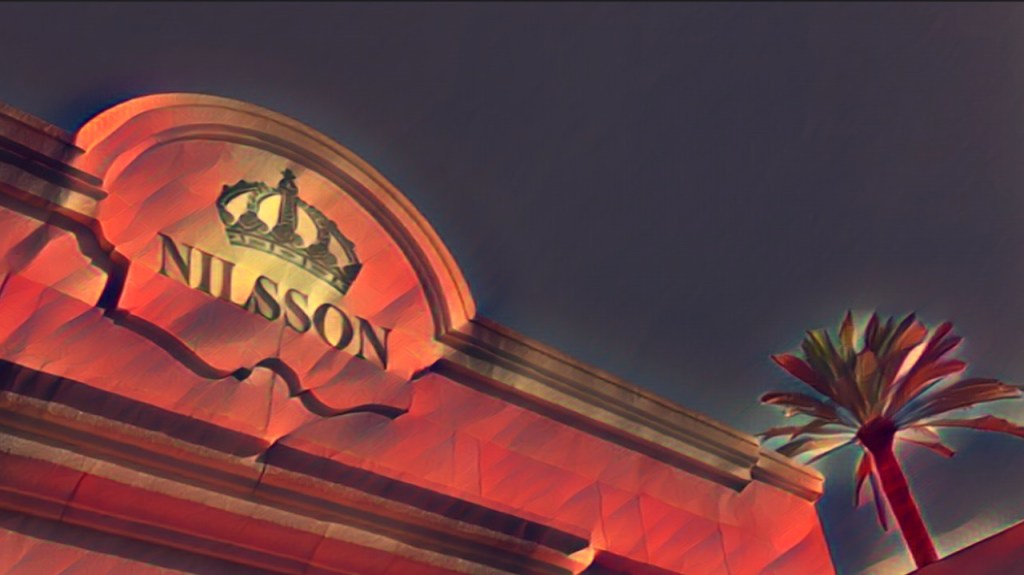
The short answer is: nobody. As per my lawyer’s advice, let me reiterate that Nilsson Group is an entirely fictional entity. It does not intend to represent any companies operating in the Canaries or elsewhere.
However, many aspects of Nilsson Group have a strong basis in reality, and, if we were in search of similarities, the obvious target would be Lopesan Hotels. For starters, they have a big construction branch, and they win a lot of public infrastructure contracts in Gran Canaria, especially the major ones. Also, they currently own the Veneguera ravine, and a few decades ago, they were keen to develop it in the same vein as Puerto Rico and other ravines in the southwest.
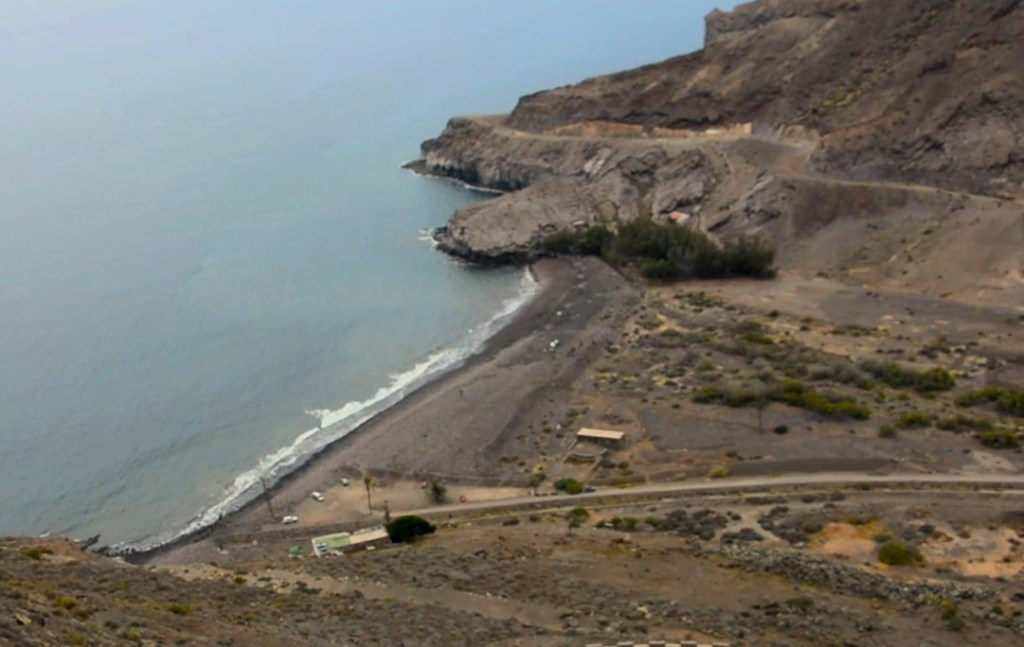
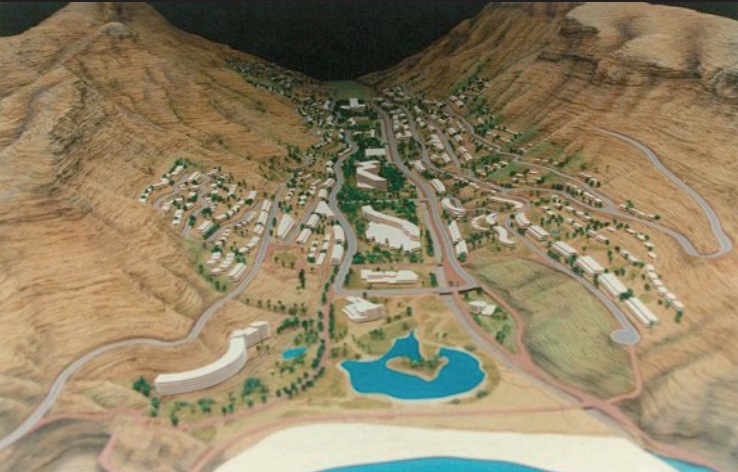
Veneguera Beach (Left) Veneguera projected development (Right)
Thankfully, the project sparked a major citizen’s response —the ‘Salvar Veneguera’ movement, which concluded with the Veneguera ravine being protected as part of the Roque Nublo natural park. Since then, Lopesan has indeed been using the ravine for agricultural purposes, supplying their hotels with fresh fruit from Veneguera’s farms.
If you’re a cynical, you could also see similarities between Chapter 5’s environmental award presentation and this piece of news:
There are indeed big similarities between Nilsson and Lopesan, but these are mostly contained in Chapter 3 and a bit of Chapter 14. For the rest of the novel, the fictional locations attributed to Nilsson Group are not owned by Lopesan in the real world. These include the cement plant (operated by CEISA), the Hotel Santa Catalina (Barceló), the Aquarium (Kiessling), the inter-island ferries (Fred Olsen), or the Rum distillery (Arehucas).
As you can imagine, it was way more convenient, and dramatically-effective, to bundle all those into a single, evil conglomerate ruling the island’s economy. But it’s just not real.
Bless my lawyer.
Source for the Veneguera project picture: de León-Hernández, J., Robayna-Fernández, M.A., Brito-Díaz, J.M., 2011. Salvar Veneguera: El Poder en Movimiento. ISBN: 978-84-614-3570-8

 The Fire Demon