
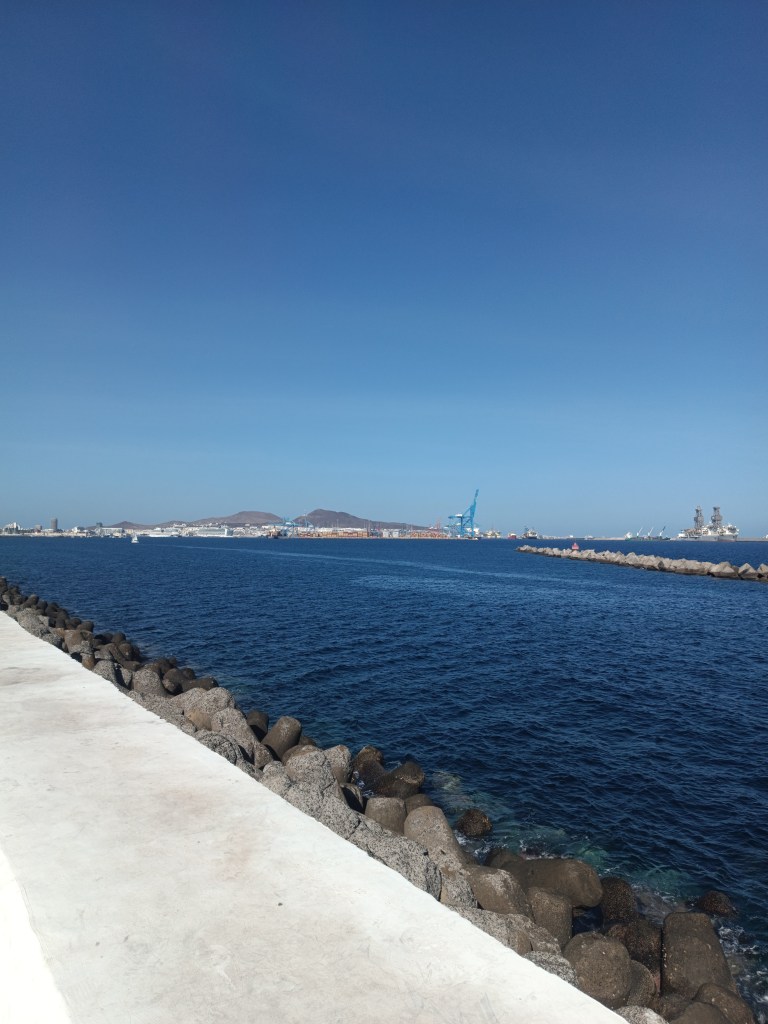
Las Palmas’ seawall, or the Avenida Marítima, is more than merely the city’s backbone. The whole urban sprawl is articulated alongside it; locals use it for sport and recreation, and personally, it is to me like Café Iruña was to Hemingway; most of The Fire Demon’s plot was conceived while strolling pensively on it.
To you, our dear tourist and reader, the seawall will become the best navigational aid for the five chapters set in Las Palmas. Not only that, it is also a veritable open-air museum full of notable sculptures that will help you get to the right places.
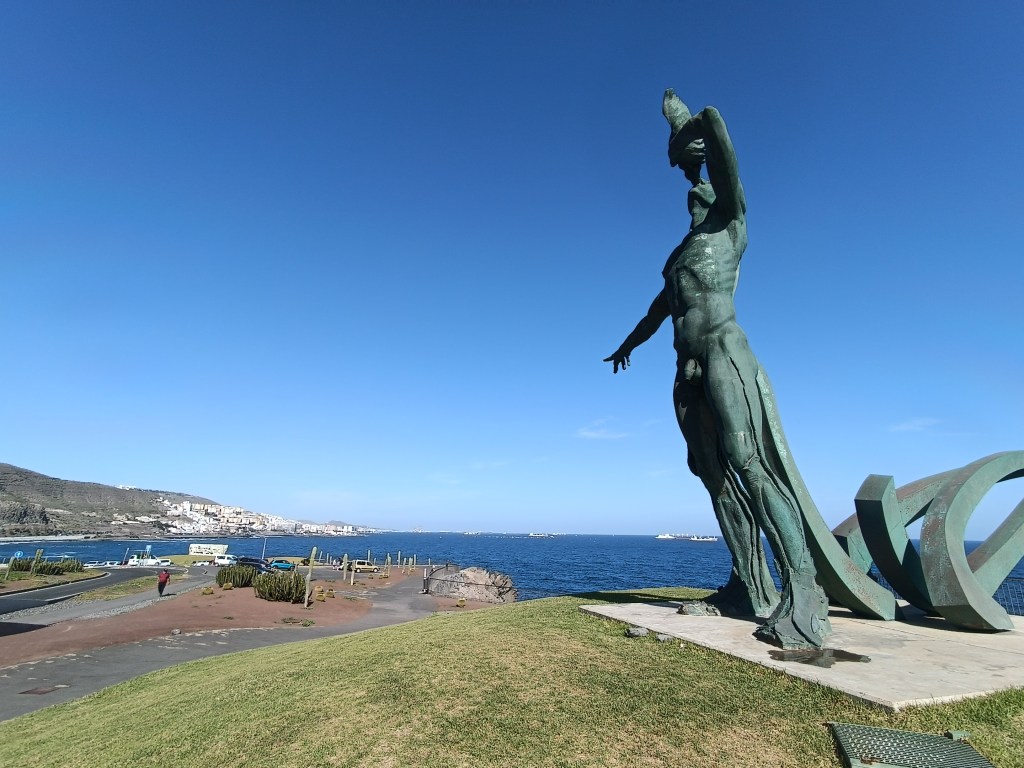
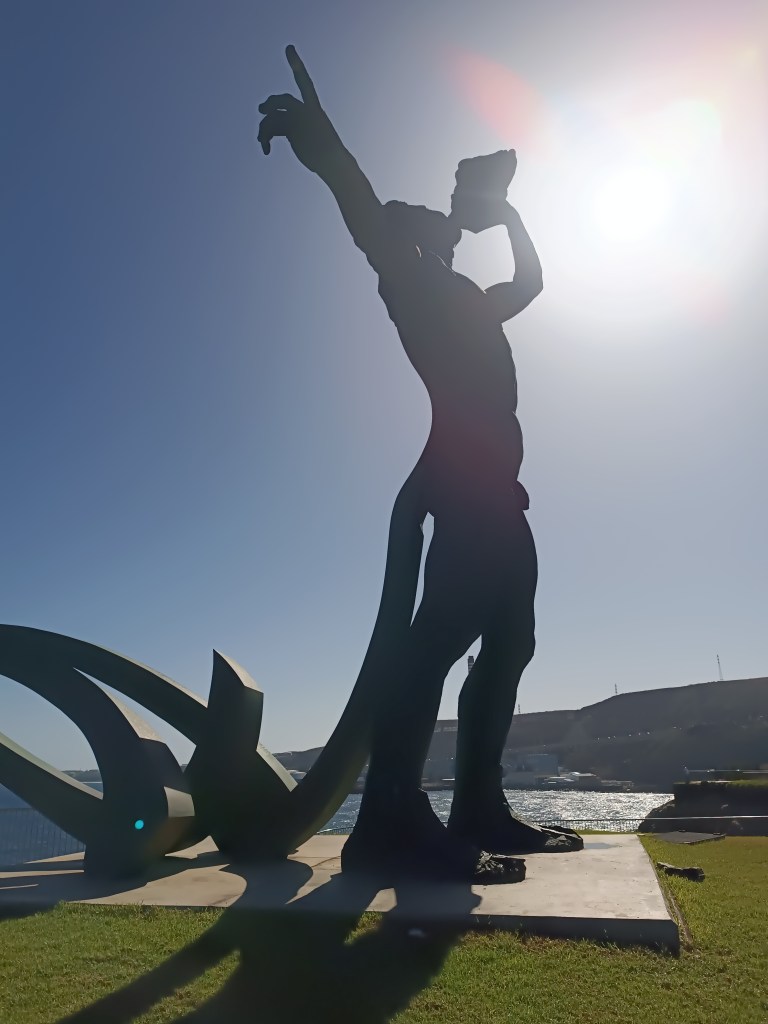
Obviously, the first of those places is the city itself. As you drive north on the GC-1, the distant view of Las Palmas will eventually show up on your windshield. The start of the city proper, and also the seawall itself, is marked with a small rest area on the right-hand side of the motorway featuring the Triton statue. From there, if you had a bike, you could cycle the whole 6 miles to La Isleta without any obstacles.
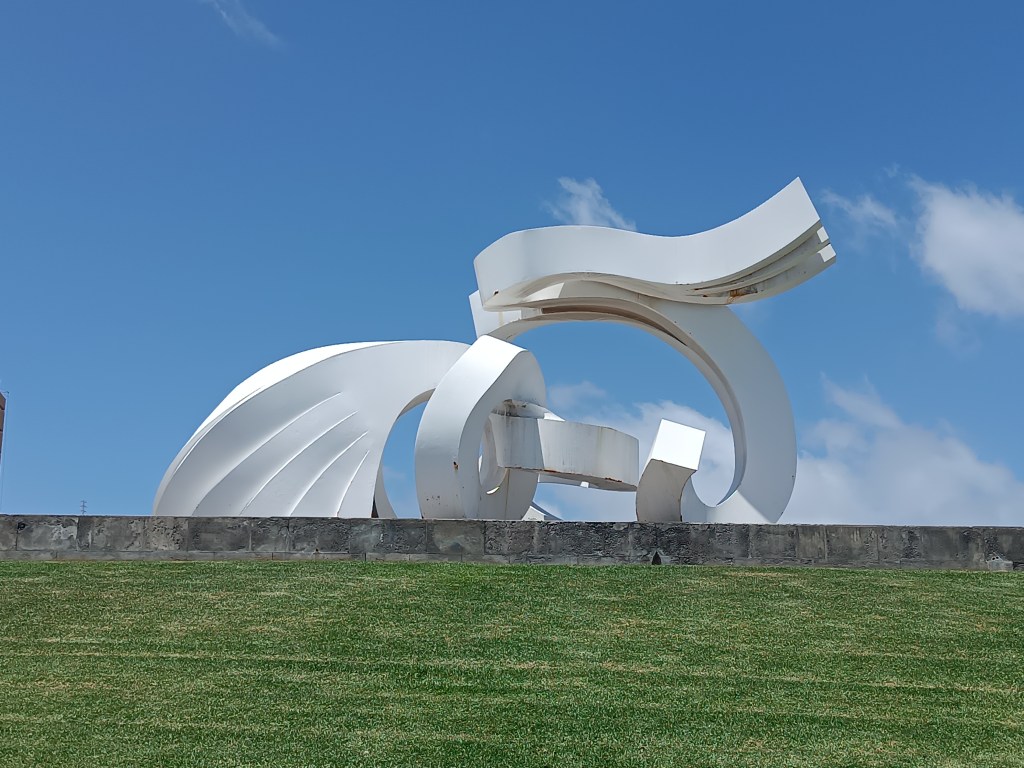
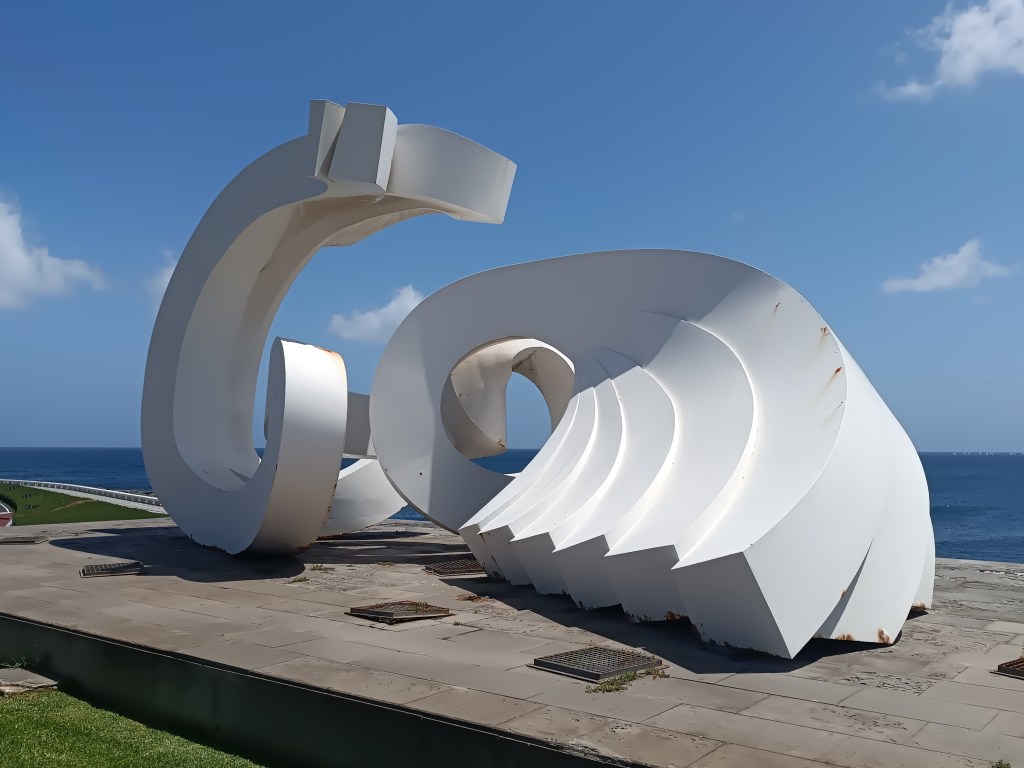
Your next port of call, provided you don’t stop for fried fish in San Cristóbal, is the iconic Lady Harimaguada. This gorgeous sculpture, by renowned artist Martin Chirino, is a personification of the city as a Guanche vestal maiden letting her hair flow in the Atlantic breeze. Incidentally, it was also my inspiration for the watery princess Agara in Chapter 18.
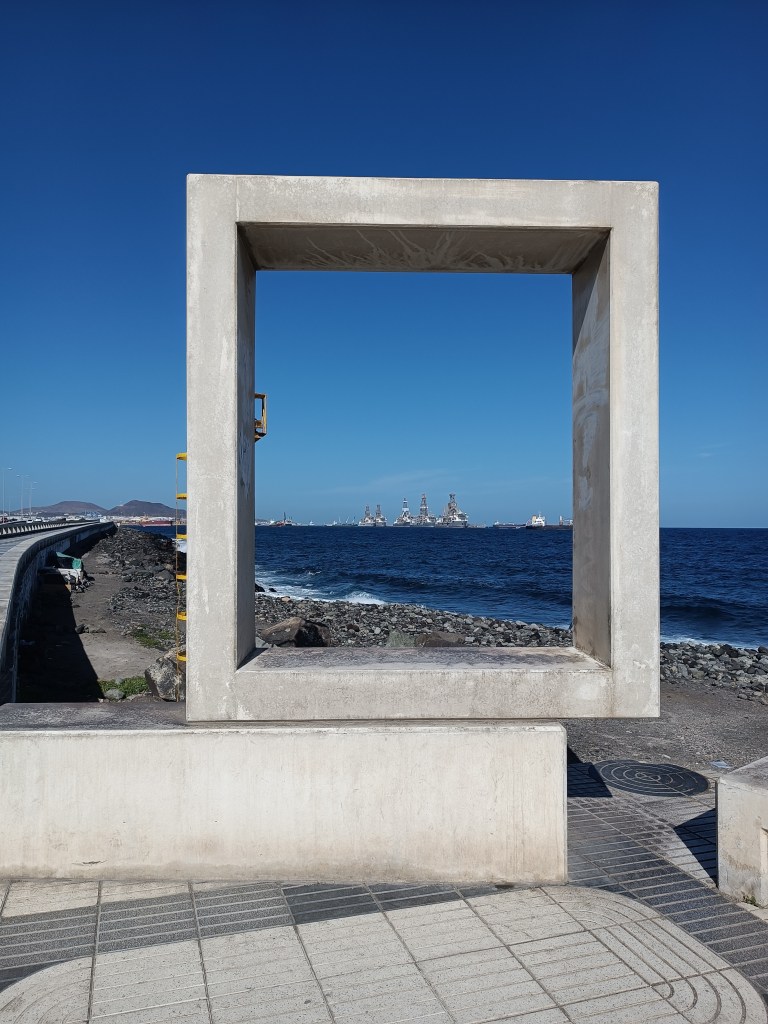
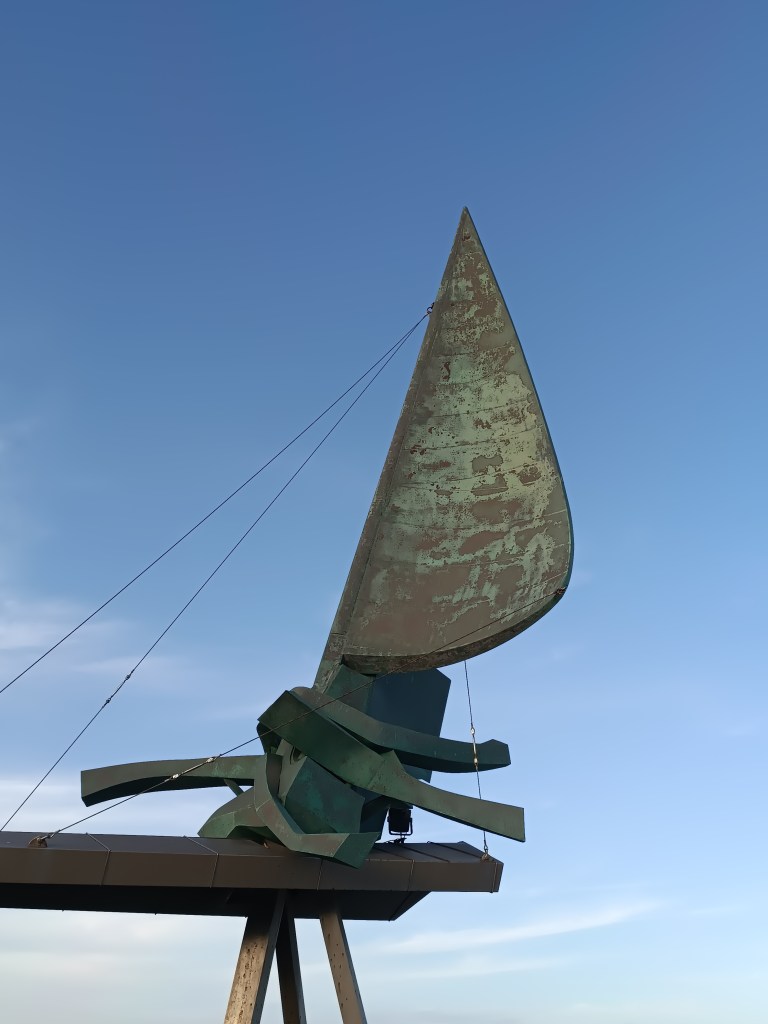
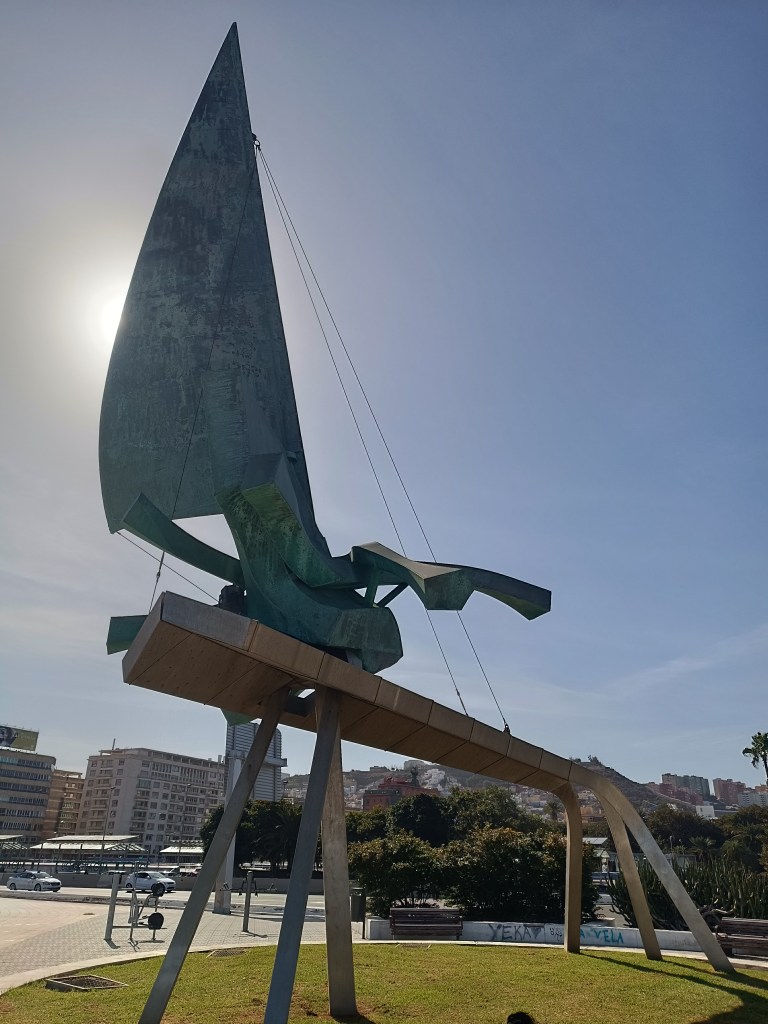
A bit further ahead, and you have reached the city centre straddling the Guiniguada ravine. A picture frame marks the spot. You should stop here for Chapter 6, including Vegueta (the old town) and Triana (high-street shopping). If you travel by bus, the relevant bus stop is the “Teatro” one that Lund visits in that chapter. Alternatively, you can alight at the San Telmo Bus Station, not far from which there is the next sculpture — an homage to lateen sailing, whose regattas take place every spring and summer just in front of the seawall.
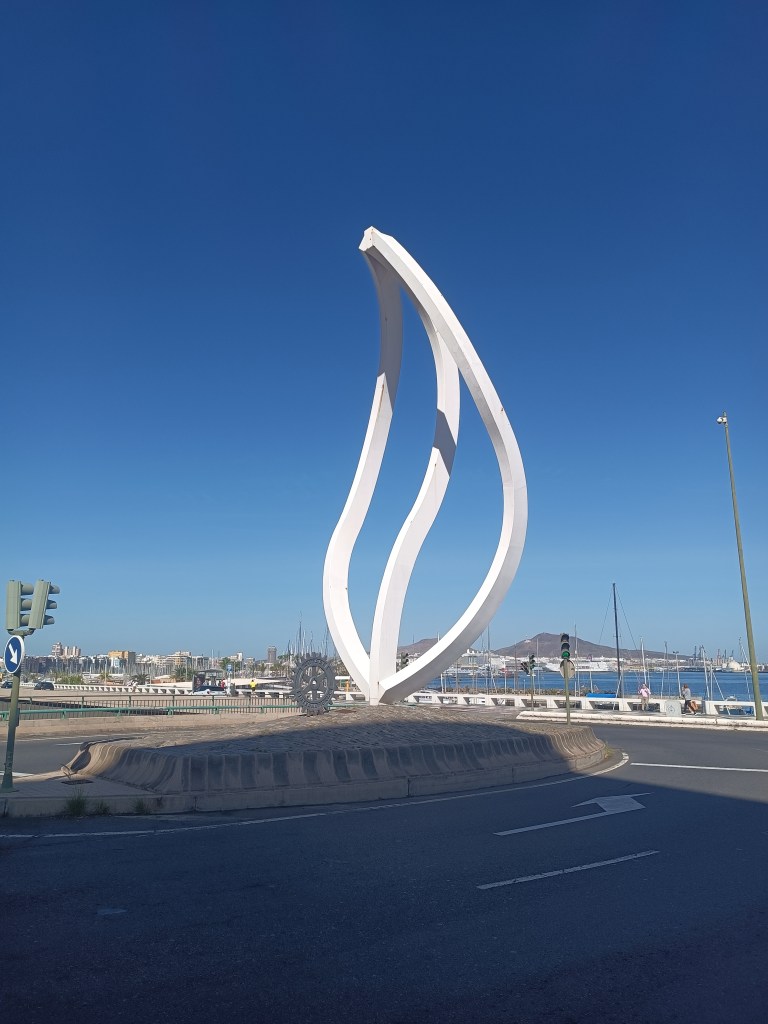
If you keep going, you will see the Alianza sculpture (Juan XXIII street), which looks mostly like a flame. Stop here for Chapter 5. The Parque Doramas and the Hotel Santa Catalina are not far.
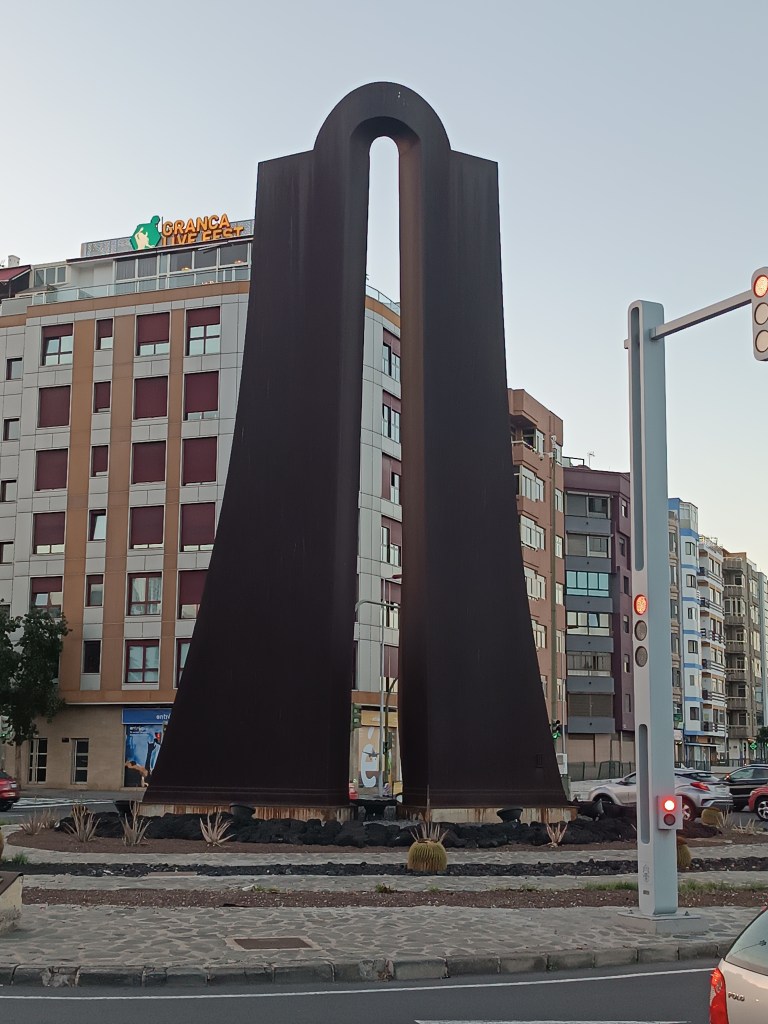
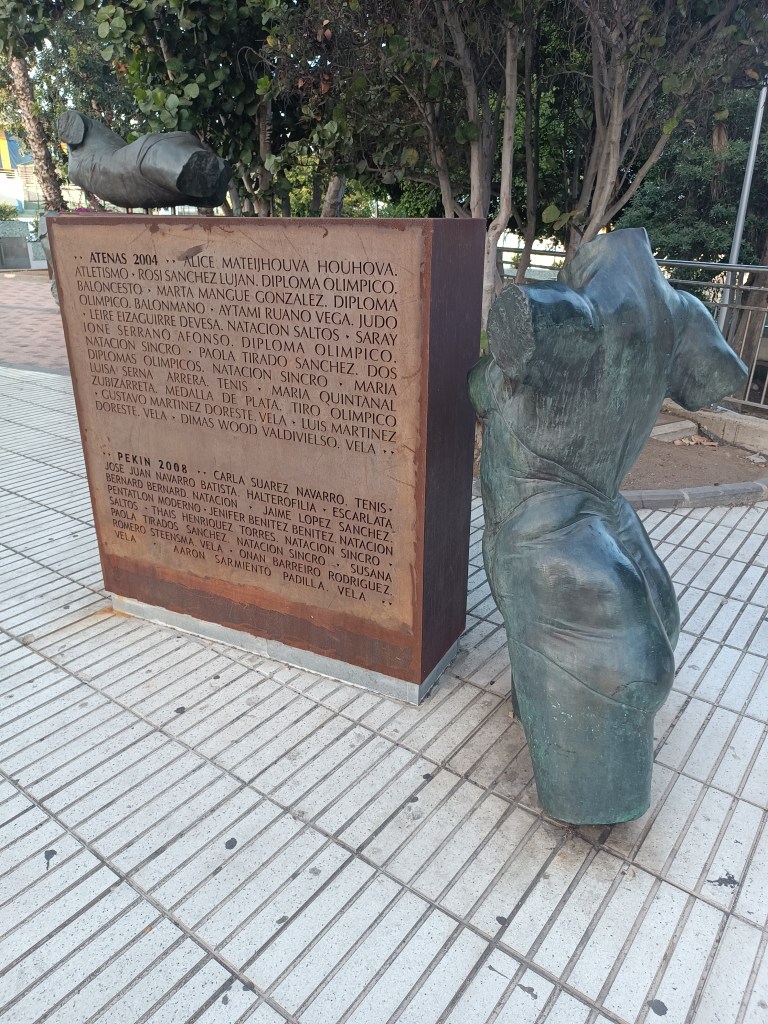
The next sculpture also sits inside a roundabout. It represents a big iron gate, and, unsurprisingly, its name is La Portada (“The Gate”). You should stop here for Chapter 8. The marina (Muelle Deportivo) and its Escolleras Jetty are right there, adjoining the Alcaravaneras beach, on the city’s port side. If you miss the stop, don’t worry, just alight at the Club Náutico and walk back. There are more sculptures there saluting the Canarian Olympians, most of them, naturally, in sailing.
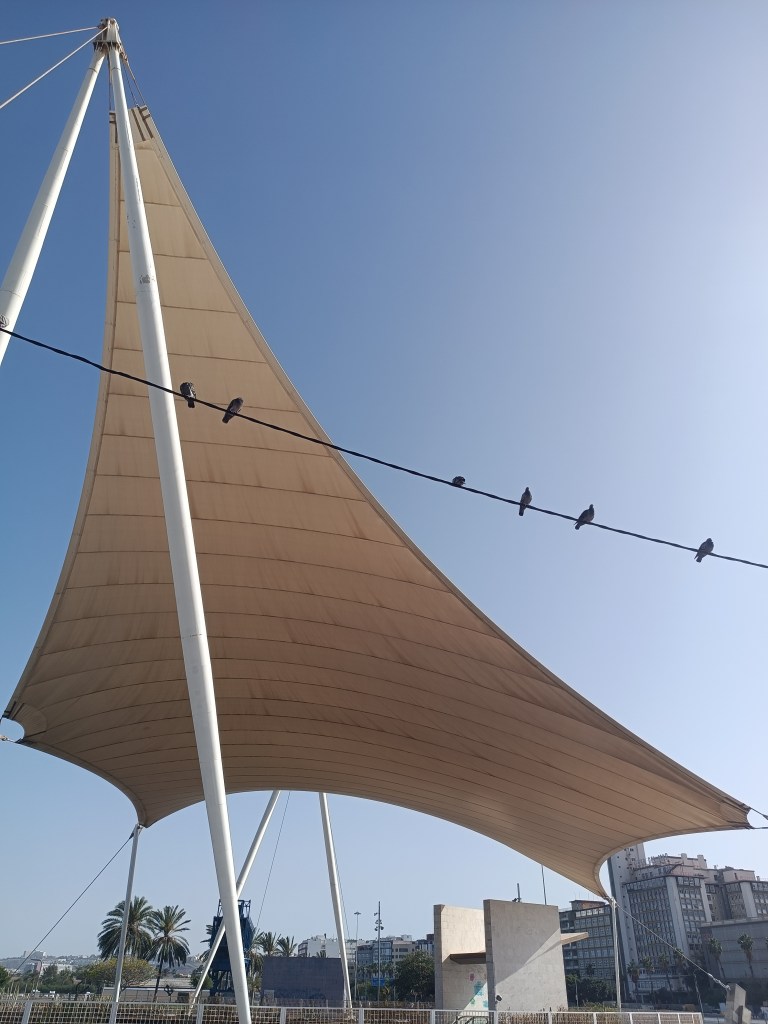
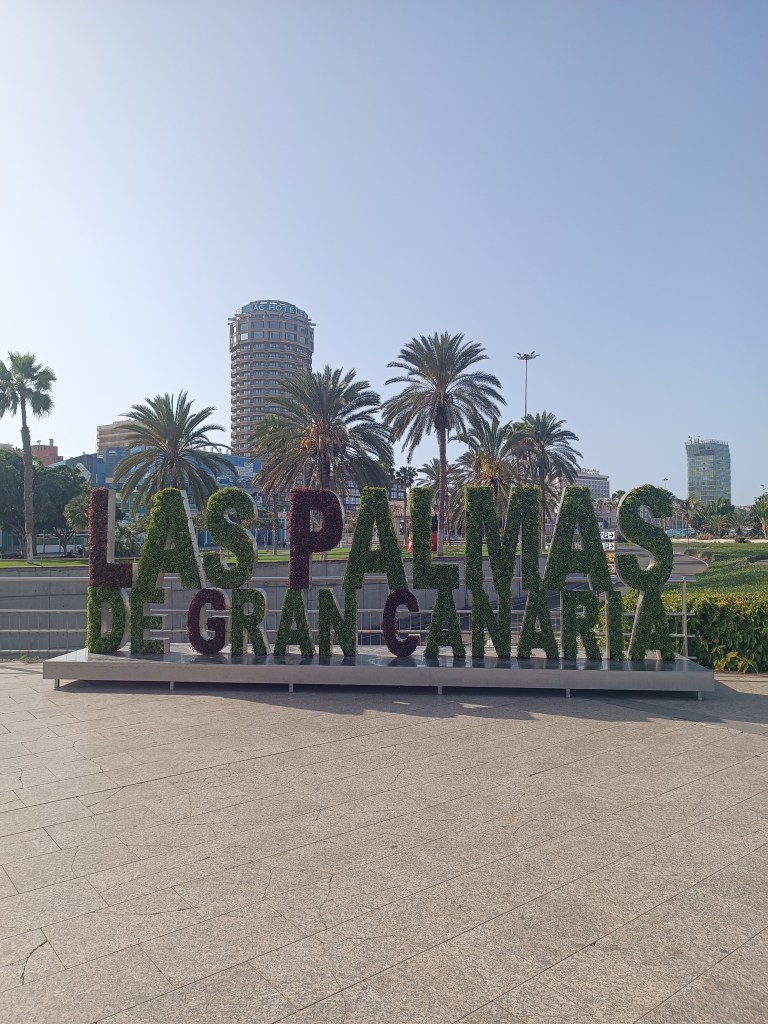
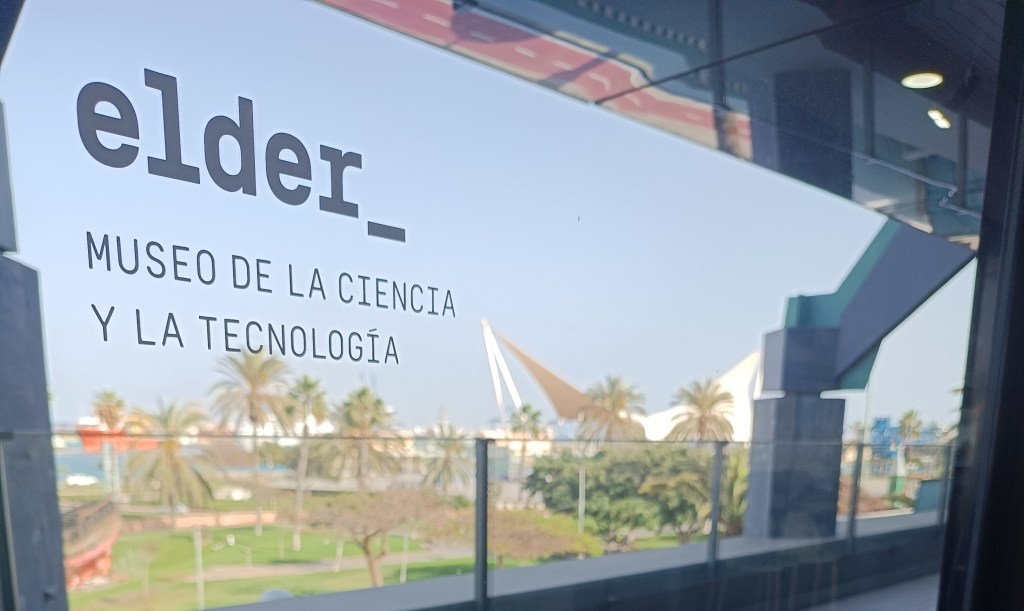
Finally, you will arrive at Santa Catalina Park and its Bus Exchange (Intercambiador). Stop here for Chapters 7 and 9. You will not have problems spotting the Elder Museum, the AC hotel, and, by the Port Bay, the Poema del Mar Aquarium. Las Canteras Beach is just across the isthmus, but that is a story for another day…
Welcome to LPA!!!
 The Fire Demon